Marketing dashboards your team can use and trust
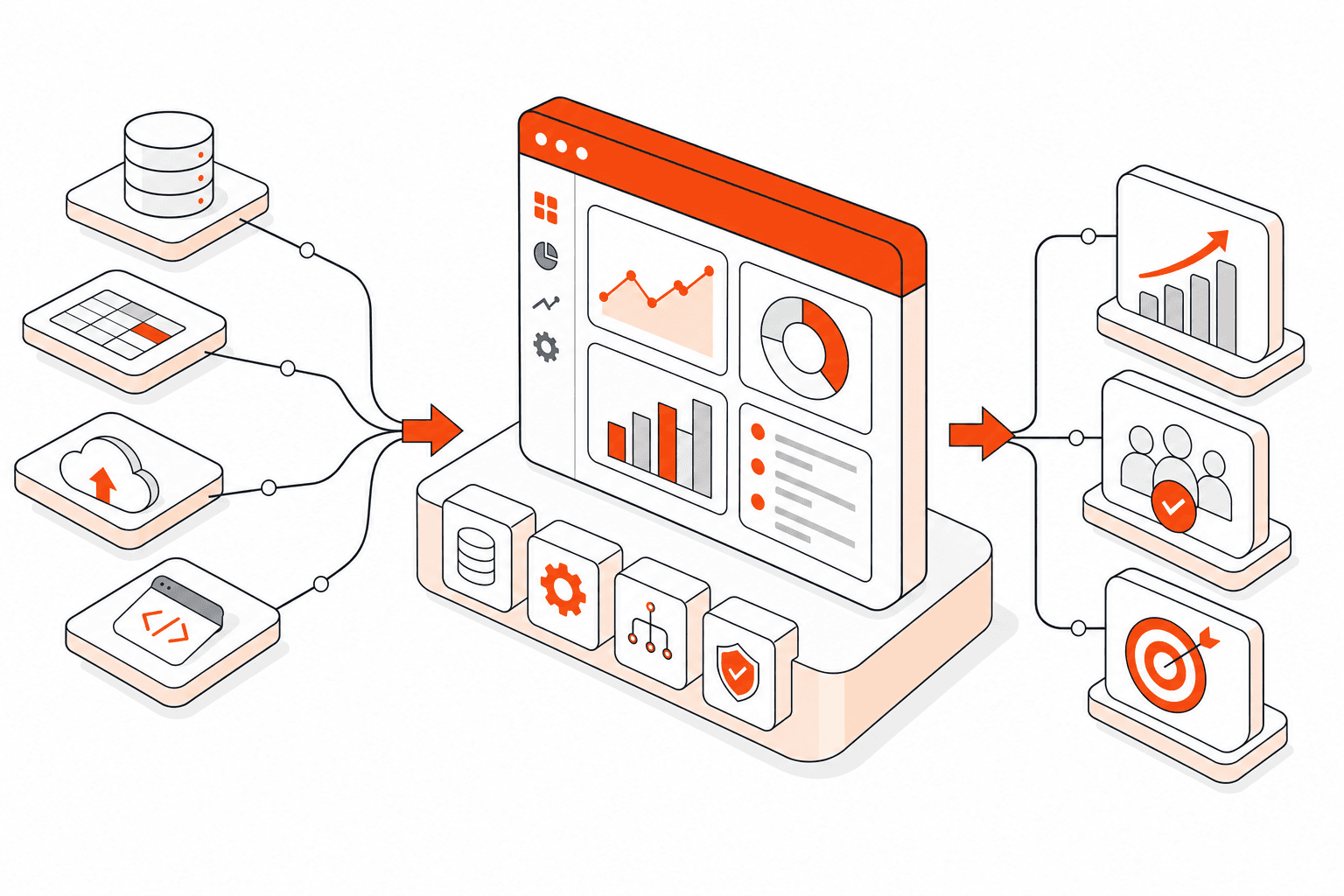
Codalent helps marketing leaders connect channel, website, CRM and revenue data into agreed KPIs, role-specific dashboards and automated reporting. Replace fragile spreadsheets and disputed numbers with a reporting foundation that supports better budget, campaign and pipeline decisions.
No fixed reporting stack or unnecessary architecture is prescribed before your data and decisions are reviewed.
Trusted by marketing teams
A reporting system built around decisions
We establish what each metric means before building the views people rely on, so dashboards drive action instead of debate.
KPI and measurement specification
Define conversions, lifecycle stages, channel rules, attribution assumptions, time zones and sources of truth. Your team works from one documented metric framework.
Data-source audit and connection plan
Review GA4, ad platforms, Search Console, HubSpot or CRM, ecommerce and relevant internal sources. You get a practical plan for dependable reporting data.
Role-specific dashboards
Create focused executive, channel, funnel, campaign or website views rather than one overloaded report. Stakeholders see the level of detail they need.
Reporting automation
Set up scheduled refreshes, data loads, alerts or report distribution where appropriate. Reduce manual consolidation while retaining clear refresh context.
QA, reconciliation and handover
Compare agreed metrics against source platforms, document accepted variances and configure client-owned access. Your team can maintain and extend the work.
Choose the reporting architecture for the data, not the template
Codalent selects the simplest maintainable approach that supports your reporting decisions, data volume, governance needs and refresh expectations.
Looker Studio for focused reporting
Looker Studio is often a practical delivery layer for GA4, Google Ads, Search Console and spreadsheet-backed reports. It works well for straightforward reporting, but it does not fix weak tracking or unclear metric definitions.
Warehouse and API pipelines for complexity
For historical data, high-volume sources, reusable transformations or complex CRM joins, we can use BigQuery and API-based ingestion. Moving business logic upstream improves reuse, auditability and dashboard performance.
Tracking and data-quality controls
We assess GA4, Google Tag Manager, UTMs, consent signals, conversion events and lifecycle fields. Missing identifiers or inconsistent tracking limit what can be reported reliably.
Reliable access and refresh design
We document credentials, connector dependencies, access roles and refresh expectations. Source processing delays, API quotas and attribution updates are surfaced instead of presented as instant certainty.
Move from disputed reports to clear reporting ownership
Marketing teams often inherit dashboards, tracking and CRM data from separate suppliers, with no shared accountability for the result. Codalent brings those responsibilities into one coordinated workflow.
Coordinated technical capacity inside your marketing workflow
Get coordinated technical capacity for reporting improvements, support and new priorities without managing multiple freelancers or building a full internal team.
Subscribe and assemble the team
Bring in the right mix of developers, a technical project manager and marketing-technology expertise. You get flexible access to the skills your reporting work needs.
Prioritise work in ClickUp
Use a shared ClickUp board to organise audits, fixes, dashboard requests and roadmap items. Priorities stay visible and tied to current marketing decisions.
Collaborate in Slack and weekly calls
A dedicated Slack channel and weekly cadence calls keep questions, approvals and blockers moving. Your team has direct access to the people doing the work.
Deliver, review and improve
We ship, validate and document each improvement. Codalent AI can assist research, planning, documentation and QA, with human technical review and ownership throughout.
Make marketing reporting easier to act on
Tell us which reports your team relies on, where the numbers break down and which decisions need better visibility. We will help identify a practical next step.
Marketing analytics dashboard FAQs
What is included in marketing analytics dashboard services?
The work can include reporting discovery, KPI definitions, source audits, tracking remediation priorities, dashboard design and build, reporting automation, reconciliation, access configuration and documentation. Scope is prioritised around the decisions your team needs to make and the condition of the existing data.
Can you audit and repair our existing Looker Studio dashboard?
Yes. We can review calculations, blends, filters, data sources, credentials, performance and reporting logic before recommending changes. An audit can also identify tracking gaps, connector risks and unclear definitions that a visual dashboard redesign alone would not resolve.
When should we use Looker Studio versus BigQuery and a BI layer?
Looker Studio can suit direct, focused source reporting. BigQuery or another warehouse becomes more useful when data needs normalization, long-term history, reusable transformations, higher-volume processing or complex cross-source joins. We assess data grain, refresh needs, governance and maintenance requirements before recommending an approach.
Why might dashboard figures differ from GA4, ad platforms or HubSpot?
Different platforms use different attribution models, identity rules, processing schedules, time zones and metric scopes. Recent GA4 data can also change after processing. We reconcile agreed dates and filters, document legitimate variances and avoid forcing figures to match artificially.
Can you connect GA4, ad platforms, HubSpot and CRM pipeline data?
Often, yes, subject to API availability, permissions, identifiers, data quality and privacy constraints. We review each source during discovery. Connecting spend to pipeline or revenue also requires clear join logic and agreed attribution treatment; it should not be assumed from a dashboard connector alone.
How do you handle access, credentials and employee turnover?
We design for client ownership using controlled accounts, suitable service accounts where applicable, least-privilege access and an access register. Connector ownership and renewal requirements are documented so reporting is not unnecessarily dependent on one employee's login.
What does the subscription include, and can priorities change?
The subscription provides an integrated delivery team that can include developers, a technical project manager and marketing-technology expertise. Work is prioritised in the shared ClickUp board, discussed through Slack and weekly calls, and adjusted as reporting needs, source changes or campaigns evolve.
Can Codalent maintain and improve the dashboard after launch?
Yes. Ongoing work can cover source changes, access issues, validation, new KPI requests, tracking improvements, automation and dashboard enhancements. This model keeps technical ownership available after the initial reporting build rather than leaving your team with an undocumented handover.
Make marketing reporting easier to act on
Tell us which reports your team relies on, where the numbers break down and which decisions need better visibility. We will help identify a practical next step.
Bring an existing dashboard, spreadsheet or source list if you have one.