Build an app people can use—and your team can keep improving
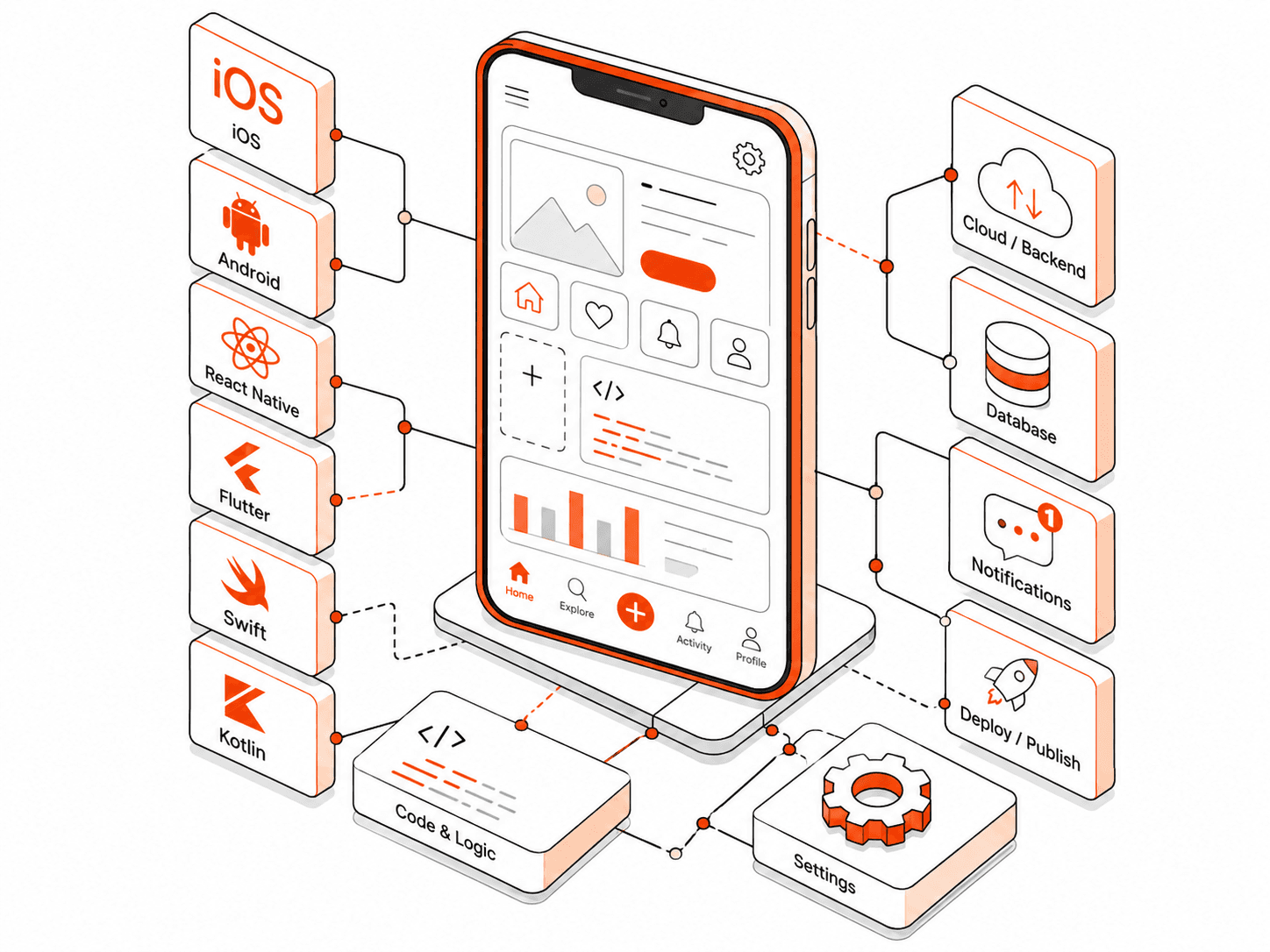
Codalent designs, builds and maintains mobile apps for startups, marketing teams and digital businesses. From native iOS and Android development to React Native and Expo, we create reliable products that connect with your website, CMS, CRM, commerce, analytics and backend systems.
Trusted by teams building better digital experiences
Everything needed to build, launch and improve your app
We shape the delivery approach around your users, business model, required device capabilities, existing systems and release roadmap—not around a preferred framework.
Product and platform planning
We define priority journeys, technical dependencies, measurable events and release requirements. You get a clear recommendation for native, cross-platform or mobile web development before committing to the build.
iOS and Android development
We build new apps, MVPs and product improvements for Apple and Android devices. Shared and platform-specific code are used where they create the best balance of speed, quality and maintainability.
Backend and API integration
We connect the app with authentication, CMS, CRM, commerce, payments, internal tools and third-party services. Your mobile experience works as part of the wider customer and operational journey.
Analytics and experimentation
We implement event tracking, attribution and consent-aware analytics for important user journeys. Product and marketing teams gain clearer data on acquisition, activation, conversion and retention.
Testing and store release
We support device testing, accessibility checks, beta distribution, app signing and submission preparation for Apple App Store and Google Play. Release risks are addressed before production review.
Maintenance and ongoing delivery
We manage backlog improvements, dependency upgrades, SDK and OS updates, monitoring, fixes and future releases. Your app remains an actively maintained product rather than a one-off project.
A mobile stack designed for your product—not forced onto it
The right architecture depends on performance, device features, team skills, release frequency and long-term ownership. We evaluate those requirements first, then select the most practical stack.
Native iOS development
For products that need deep Apple-platform integration, high performance or a fully native experience, we can build with Swift and SwiftUI. This approach suits advanced device capabilities, platform-specific interfaces and long-term iOS product roadmaps.
Native Android development
For Android-first or platform-specific products, we can work with Kotlin and Jetpack Compose. Native Android development is useful when device integration, performance or Google-platform behaviour requires dedicated implementation.
React Native and Expo
For many products, React Native with TypeScript and Expo provides a strong balance of development speed, shared code and native capability. Expo can simplify builds, testing, over-the-air updates and release workflows while still allowing native modules when the product requires them.
App architecture and state
We structure apps around reusable components, clear navigation, predictable state management and maintainable data flows. Architecture decisions account for offline behaviour, caching, permissions, background tasks and future feature development.
APIs, authentication and data
We integrate REST or GraphQL APIs, secure authentication, user accounts, content systems, payments, notifications and third-party platforms. Backend work can include new endpoints, middleware and services where the existing stack needs to support the app.
Delivery, quality and observability
Technical delivery can include automated builds, environment management, TestFlight and Google Play testing tracks, crash reporting, performance monitoring and release checklists. We make production health and release ownership visible after launch.
Typical technologies may include Swift, SwiftUI, Kotlin, Jetpack Compose, React Native, Expo, TypeScript, Node.js, Python, REST, GraphQL, Firebase services, app-store tooling and modern CI/CD workflows. Final recommendations depend on technical discovery and product requirements.
Replace fragmented mobile delivery with clear technical ownership
Mobile projects slow down when app development, backend work, analytics and store releases have different owners. Common problems include:
Mobile products we have delivered
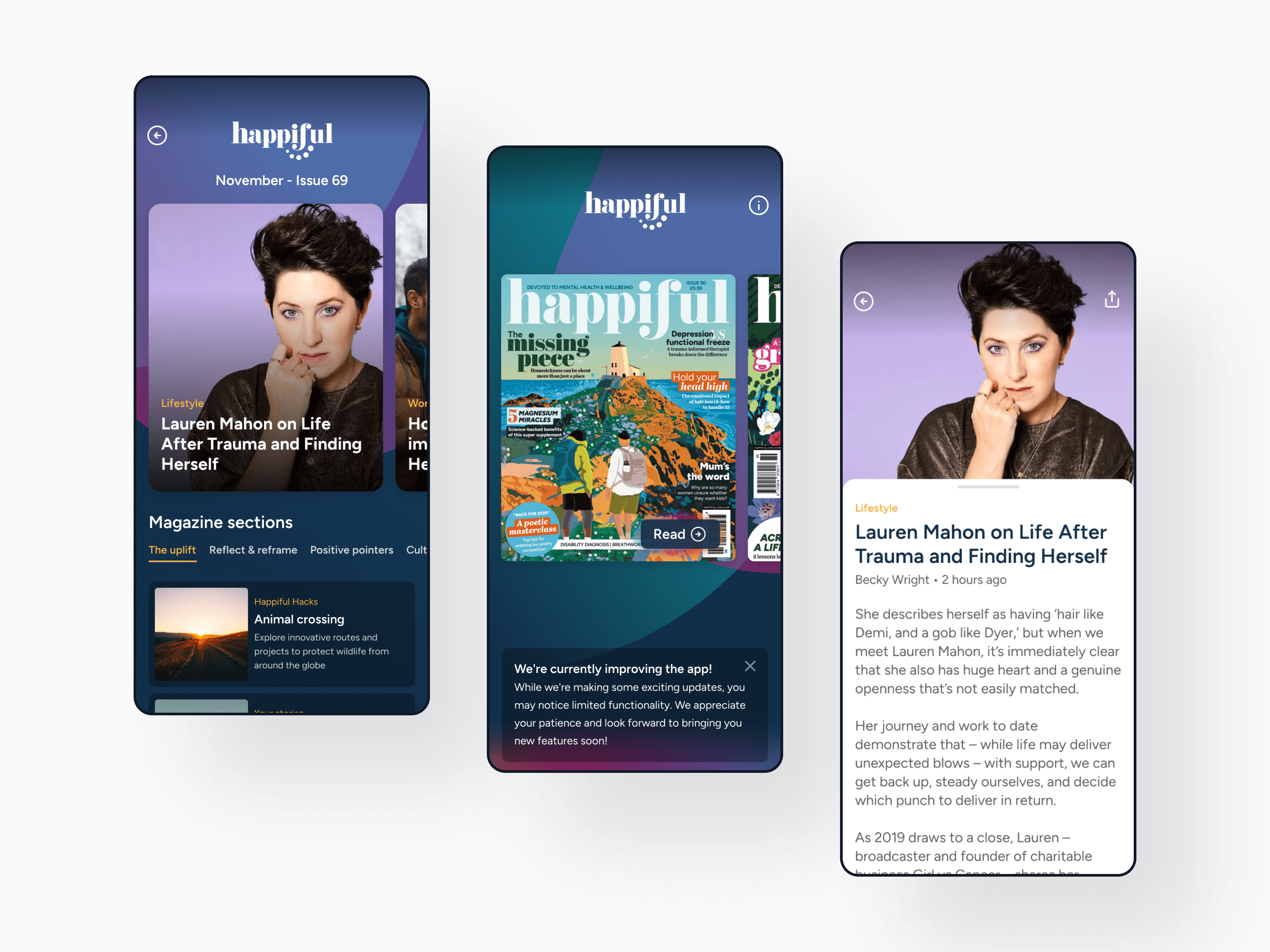
Bringing Happiful Magazine to Mobile: iOS & Android App Development
Codalent built the official iOS and Android app for Happiful, the UK’s award-winning wellbeing magazine. Powered by React Native and Expo, the app delivers a seamless, ad-free reading experience and new features like therapist search.
“The new app release is AMAZING! I love the Find a therapist search, I didn’t think it would be that seamless an experience... so good!”
An integrated mobile delivery team within your team
Get the technical capabilities required to move your mobile roadmap forward without coordinating multiple freelancers or building a complete internal team.
Assemble the right delivery team
Your subscription can include mobile and backend developers, a technical project manager and marketing-technology expertise. The mix adapts to the current roadmap, integrations and release stage.
Prioritise the roadmap in ClickUp
Features, technical debt, dependencies and release tasks are managed in a shared ClickUp board. Codalent AI supports research, planning and documentation while people remain accountable for technical decisions.
Work together in Slack and weekly calls
A dedicated Slack channel supports day-to-day collaboration. Weekly cadence calls are used to review progress, demonstrate completed work, resolve decisions and reprioritise the backlog.
Release, measure and improve
We deliver agreed work, validate quality and measurement, then move to the next priorities. This creates a consistent cadence for product features, integrations, maintenance and post-launch optimisation.
Mobile app development FAQs
Do you build native apps or use React Native and Expo?
Both. We can build native iOS and Android apps or use React Native and Expo for a shared cross-platform codebase. The recommendation depends on performance requirements, device capabilities, integrations, release frequency, budget and the skills of the team that will maintain the product.
When is Expo a good choice?
Expo is well suited to many React Native products that need fast iteration, managed build workflows, straightforward testing and a shared iOS and Android codebase. We assess native module requirements, background behaviour, performance and long-term ownership before recommending it.
Can you take over an existing mobile app?
Yes, subject to a technical review. We assess the repository, architecture, dependencies, release process, backend integrations, analytics and known issues before proposing a practical takeover and improvement plan.
What is included in the subscription?
Scope can include discovery, architecture, mobile development, backend and API work, analytics, QA, beta testing, store-release support, documentation and maintenance. Responsibilities and priorities are agreed around your product, systems and internal capabilities.
Which specialists will work with us?
Your team may include mobile and backend developers, a technical project manager and a marketing-technology expert. The mix depends on your platforms, integrations, measurement needs and delivery stage rather than a fixed staffing package.
Can Codalent work with our existing website or technology stack?
Yes, subject to technical discovery. We review your CMS, CRM, commerce platform, authentication, analytics and APIs before confirming integration scope. Existing ownership, documentation and API stability are made visible early.
How are tasks prioritised?
Work is prioritised in the shared ClickUp board against user value, business objectives, technical dependencies, risk and available capacity. Priorities can be reviewed during weekly calls as customer feedback, campaigns or requirements change.
Can the subscription scale as our roadmap changes?
The delivery mix can be adjusted as priorities change, subject to the agreed subscription and team availability. A release phase may require more development and QA capacity, while maintenance may need a smaller ongoing team.
Is this suitable for ongoing work or one-off projects?
The model is designed for ongoing delivery, support and improvement. A defined build or modernisation project can provide the initial roadmap, but mobile products normally require continuing OS updates, dependency maintenance, monitoring and backlog work.
Who owns the source code and app-store accounts?
Client-owned source repositories, Apple and Google developer accounts, signing assets and documented production access are the recommended operating model. Ownership, licensing, credentials and handover responsibilities are confirmed in the engagement terms.
Plan a mobile product your team can launch, measure and improve
Tell us about your users, current app or product idea, existing stack and priority journeys. We will help you identify the right architecture, required integrations and practical next steps.
No fixed platform recommendation or commercial commitment is required before the conversation.