Know when your website stops converting
Codalent provides website monitoring services for marketing teams that depend on campaign pages, forms, booking flows and business-critical websites. We define what working means, configure meaningful checks and turn incidents into practical fixes.
Bring your current monitoring tools, known failure points or upcoming launches—no complete brief required.
Trusted by teams building critical digital journeys
Monitoring built around the journeys that matter
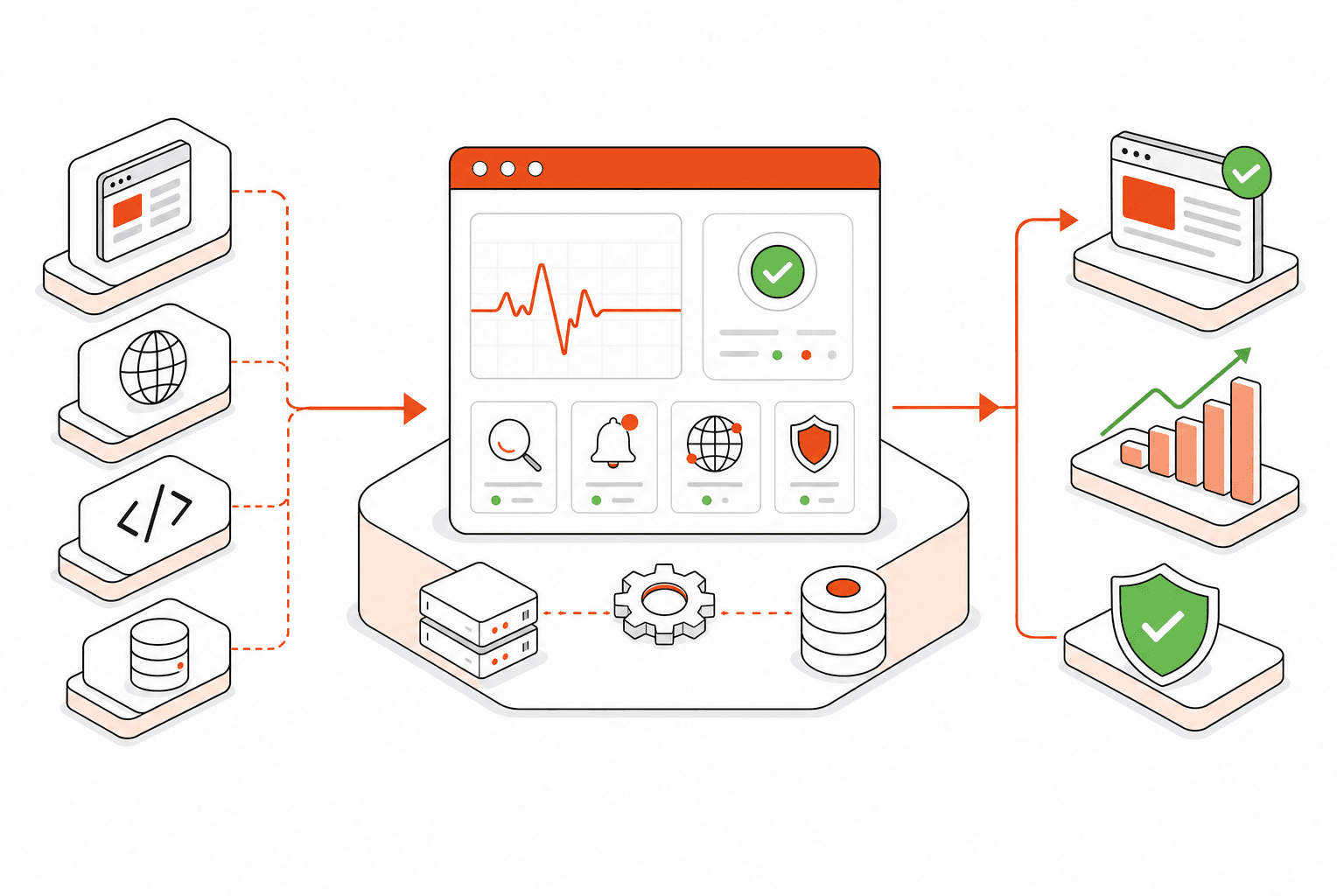
We operate monitoring as a practical layer of website ownership, not as a dashboard your marketing team has to interpret alone.
Critical journey inventory
We identify priority pages, forms, redirects, APIs, SSL certificates, DNS records and third-party dependencies.
Independent website checks
We configure external availability and content checks so you can see the public visitor experience, not only infrastructure status.
Conversion-path testing
Selected browser-based tests validate journeys such as lead capture, login, booking or checkout using safely managed test data.
Actionable alert routing
Alerts go to agreed owners through channels such as Slack, email, ticketing or webhooks, with escalation rules and maintenance windows.
Incident coordination
We document triage steps, stakeholder communications, vendor escalation and mitigation options so incidents do not stall between suppliers.
Operational improvement backlog
Scheduled reporting turns recurring failures, response-time trends and release issues into prioritised website and hosting improvements.
Layered monitoring, selected for your web stack
A successful HTTP response does not prove that a JavaScript site, form or integration works. Codalent combines the right monitoring layers for your website, existing tooling and operational model.
Availability and content checks
HTTP, HTTPS and TCP checks can validate status codes, redirects, expected page content and API responses. They provide efficient baseline coverage for public pages and services.
Synthetic browser journeys
Browser automation is useful when assets, JavaScript, authentication or form confirmation matter. We use stable selectors, controlled test accounts and safe cleanup to reduce brittle tests.
Performance and real-user context
Synthetic page tests reveal repeatable performance changes; field data, where available, adds real-user context for Core Web Vitals and priority templates.
Tools and integrations
We can work with existing platforms such as CloudWatch, Google Cloud Monitoring, Datadog, New Relic or dedicated monitoring tools. The choice depends on coverage, access, alerting needs and current operations.
Reliable alert design
Multiple locations, confirmation rules, thresholds and maintenance windows help reduce noise. Monitoring is coordinated with WAF rules, consent tools, rate limits and deployment workflows.
Move from reactive checks to clear operational ownership
Marketing teams often discover failures through prospects, sales teams or campaign results. The issue is rarely just a missing tool; it is unclear scope, ownership and follow-through.
A technical operations team that works with marketing
Your subscription gives you coordinated access to the technical capabilities needed to monitor, maintain and improve your website without assembling multiple freelancers or a full internal operations team.
Subscribe and assemble the team
We align the required developers, technical project manager and marketing-technology expertise around your monitoring scope. You get the right coverage without hiring every specialist internally.
Prioritise work in ClickUp
Monitoring setup, incidents, fixes and improvement work are visible in a shared ClickUp board. This creates clear priorities, ownership and delivery context.
Collaborate in Slack and weekly calls
A dedicated Slack channel and weekly cadence calls keep marketing, technical stakeholders and vendors aligned. Decisions and escalations have a clear route.
Deliver, review and improve
We configure coverage, review incidents and prioritise improvements continuously. Codalent AI can accelerate research, documentation and quality checks, with human technical review and ownership.
Not sure which website journeys need monitoring first?
Start with the pages, forms and conversion flows that would hurt most if they failed quietly. Codalent can begin with a monitoring assessment, a coverage setup or ongoing operations for selected journeys.
Website monitoring services FAQs
What is included in website monitoring services?
Scope typically includes monitoring discovery, critical-journey definitions, configured checks, alert routing, an incident runbook, dashboards and operational reporting. Ongoing work can include tuning monitors after launches, reviewing incidents and prioritising fixes. Final scope depends on your website, access and required response model.
Can you monitor more than our homepage?
Yes. We can monitor priority campaign pages, redirects, lead forms, booking or checkout flows, login journeys, APIs, DNS, SSL expiry, cron jobs and selected third-party dependencies. We first identify which failures would affect revenue, lead flow or campaign performance.
Our host or CDN already monitors uptime. Why add this service?
Host and CDN telemetry is useful, but it does not always represent what a visitor sees. Independent external checks and browser-based tests can reveal broken content, JavaScript failures, redirects, forms and integrations that infrastructure monitoring may not validate.
How do you avoid false alerts?
We use sensible thresholds, retry and confirmation policies, multiple locations where appropriate, maintenance windows and regular review of noisy checks. Success conditions are agreed upfront, including redirects, expected content and workflow confirmations, rather than relying only on an HTTP 200 response.
Can Codalent work with our existing monitoring tools and website stack?
Yes. We can work with common CMS platforms, custom applications, cloud environments and existing monitoring tools. We assess current coverage, access boundaries, alert channels and integration options before recommending whether to extend current tooling or introduce another monitoring layer.
How are synthetic-test credentials and production data handled?
Test credentials and data are treated as production secrets. We use least-privileged access, secure storage, rotation and redaction where available. For sensitive workflows, we define dedicated test accounts, non-production payment methods and safe cleanup steps before enabling monitoring.
Who responds to alerts after hours?
Detection and remediation are scoped separately. We document who receives alerts, severity levels, escalation paths and authorised actions. Codalent does not imply 24/7 remediation unless that response coverage, access and operating model are explicitly agreed.
Can the subscription support ongoing improvements as well as monitoring?
Yes. The subscription is designed for ongoing delivery. Alongside monitoring, the team can address website, CMS, performance, hosting, tracking or integration issues that monitoring identifies, with work prioritised transparently in the shared ClickUp board.
Protect the website journeys your marketing depends on
Discuss your critical pages, conversion flows and current monitoring setup with a technical team that can help define practical coverage and operational ownership.
Bring your current monitoring tools, known failure points or upcoming launches. You do not need a complete technical brief.