Keep critical digital platforms reliable, deployable and visible
Codalent helps SaaS, ecommerce and digital teams manage the cloud systems behind campaigns, customer journeys and product releases—without building a full internal platform team.
No obligation to migrate providers or move accounts away from client ownership.
Trusted by teams building digital growth
Cloud operations with clear ownership
Start with the risks affecting your customer-facing systems, then improve the operating practices around them.
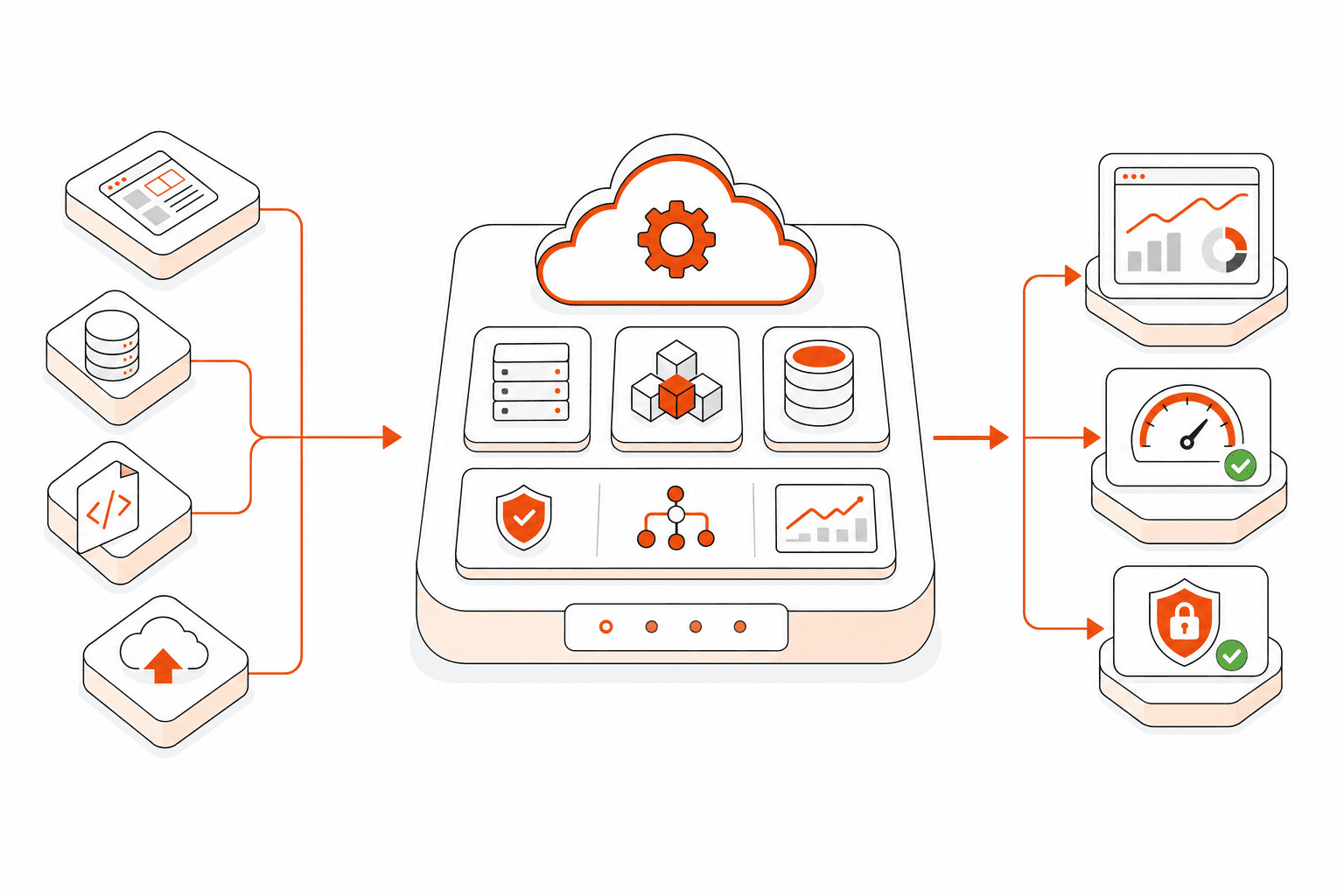
Cloud estate assessment
Map accounts, environments, dependencies, access, ownership and critical journeys such as checkout, signup or publishing.
Safer releases
Improve deployment checks, release criteria, rollback steps and change visibility for agreed systems.
Useful observability
Refine dashboards, health checks, alert routing and journey monitoring so alerts lead to a defined action.
Cost and governance visibility
Review tagging, budgets, idle resources, access practices and recurring cloud spend signals.
Incident and recovery readiness
Document escalation paths, runbooks, backup expectations, restore checks and post-incident follow-up.
A practical technical approach, selected for your stack
We assess the provider, hosting model, runtime, CMS, integrations and customer journeys before defining scope. AWS, Azure, GCP, DigitalOcean, managed hosting and deployment platforms all require different ownership boundaries.
Infrastructure as code
Use version-controlled configuration, often Terraform where appropriate, to make agreed environment changes reviewable and repeatable. Remote state, locking, access controls and recovery are treated as operational concerns.
Layered monitoring
Combine cloud signals with application errors, logs, external uptime checks and key journey checks. Telemetry access, retention and redaction are reviewed because logs can expose sensitive data.
Deployment safety
Use CI/CD workflows, environment separation, health validation and documented rollback or roll-forward decisions. The right approach depends on release frequency, risk tolerance and existing tooling.
Resilience with defined trade-offs
Availability, latency, RTO and RPO are agreed from business impact, not assumed. Backups and recovery procedures are only treated as reliable after scoped restore or failover verification.
Replace reactive cloud work with a visible operating rhythm
Cloud issues often sit between engineering, hosting providers, agencies and marketing teams. That makes ownership and escalation unclear when releases matter most.
How the Codalent subscription works
Get coordinated technical capacity for ongoing cloud operations, support and improvement—without coordinating separate freelancers or hiring every specialist internally.
Subscribe and assemble the team
We align developers, a technical project manager and marketing-technology expertise to your priorities. Flexible access gives you relevant capability without a fixed large team.
Prioritise work in ClickUp
The shared board makes risks, requests, planned changes and decisions visible. Work is ordered around business impact, technical risk and release timing.
Collaborate in Slack and weekly calls
A dedicated Slack channel and weekly cadence calls keep marketing, product and engineering stakeholders aligned on ownership, blockers and upcoming changes.
Deliver, review and improve
We implement agreed work, report on incidents and risks, and refine the roadmap. Codalent AI can support research, documentation and QA, with human review and technical ownership retained.
Not sure where your cloud operations need the most attention?
Start with what you run today, how releases work and where operational ownership is unclear. Codalent can begin with an assessment, a remediation backlog or ongoing support for selected systems.
Cloud infrastructure management FAQs
What does cloud infrastructure management include?
Scope can include cloud discovery, environment and access review, monitoring, deployment workflow improvements, infrastructure as code, cost governance, incident runbooks, backup review and operational reporting. We agree the systems and responsibilities before work starts, rather than assuming full ownership of every platform.
Can Codalent work in our existing AWS, Azure, GCP or hosting account?
Yes, subject to an assessment of your provider, hosting, runtime, access model, monitoring and dependencies. Client-controlled accounts are often appropriate. We define approved access, change processes and responsibility boundaries with your internal team and other suppliers.
Do we need a cloud migration first?
No. Many engagements begin with stabilization, better monitoring, release reliability, cost visibility or documentation in an existing environment. If a migration or replatforming is advisable, we separate that larger project from the immediate operations work.
Will you provide 24/7 monitoring, response times or uptime guarantees?
Coverage, response processes and service objectives are engagement-specific. We do not make blanket uptime or 24/7 support claims. We can help define alert ownership, escalation paths, service objectives and reporting that reflect your systems, provider dependencies and business risk.
Can you reduce our cloud spend without reducing reliability?
We review spend alongside resilience, performance, operational effort and delivery needs. Typical actions may include tagging, budgets, anomaly alerts, rightsizing, storage retention and non-production scheduling. Recommendations explain the trade-offs so cost reductions do not create avoidable risk.
How are backups and recovery handled?
We document backup coverage, recovery expectations and ownership for agreed systems. Where appropriate, stakeholders define RTO and RPO targets based on business impact. A configured backup is not treated as a recovery outcome without a scoped restore or failover test.
What is included in the subscription and how is work prioritised?
Your subscription can include developers, a technical project manager, marketing-technology expertise, Slack collaboration, a shared ClickUp board, Codalent AI support and weekly calls. We prioritise work together based on customer impact, risk, campaign deadlines, dependencies and available capacity.
Can Codalent collaborate with our developers or IT provider?
Yes. Codalent works as an extension of your team, not a replacement for every internal capability. We document interfaces with developers, cloud-provider support, hosting vendors and third-party platforms so approvals, incident communications and handovers are clear.
Make cloud operations easier to manage
Start with a focused assessment of your cloud estate, critical customer journeys and operational risks. We will help you define the most useful next steps.
Bring your current stack, known issues or upcoming launch plans. You do not need a complete technical brief.