Release richer commerce experiences without replacing your commerce backend
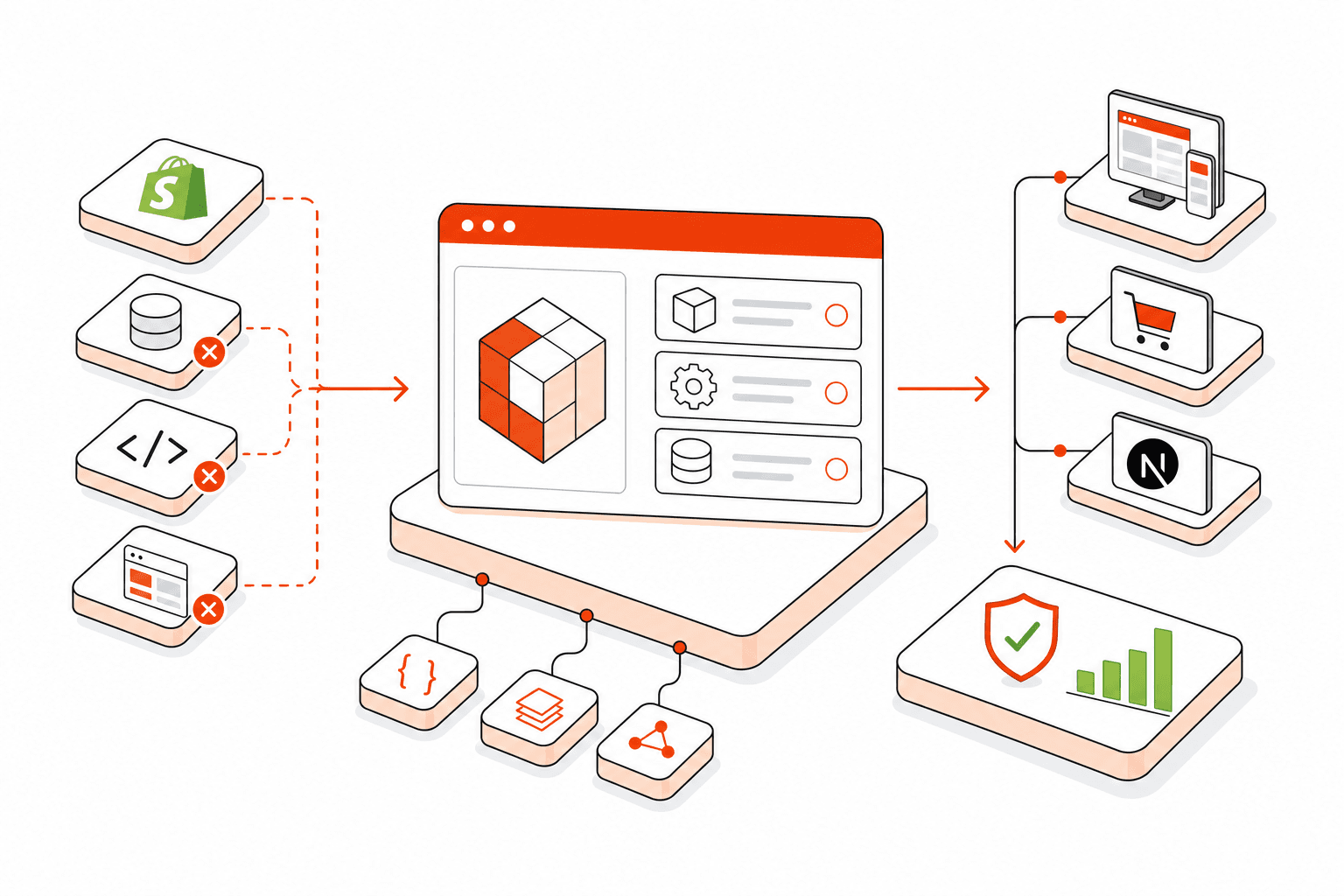
Codalent builds custom headless storefronts for ecommerce marketing and product teams that need faster campaign releases, stronger content control and integrations beyond a theme. Shopify can remain the source of truth for catalog, cart, checkout and orders.
Scope is based on your platform, customer journeys, content workflow and integration needs — not a fixed storefront template.
Trusted by teams building and improving digital commerce
A storefront built around how your team sells
We define the operating model as well as the frontend, so marketing can work within clear publishing guardrails.
Architecture assessment
We assess whether headless is justified, then map integrations, risks, ownership and delivery phases. You avoid taking on custom frontend complexity when a theme can meet the requirement.
Custom storefront build
We build responsive product, collection, search, cart and content experiences around your required customer journeys — supporting distinctive merchandising and product education without theme constraints.
Content and component model
Reusable campaign sections, templates, previews and publishing roles are defined with your marketing team, so approved content changes launch with less developer dependency.
Commerce integrations
We connect the storefront to the systems that have a clear role, including CMS, PIM, search, reviews, subscriptions or CRM, so customers get consistent product and content information without unnecessary data duplication.
Migration and launch controls
We plan routes, redirects, feeds, analytics validation, QA, monitoring and rollback procedures to reduce avoidable risk during a storefront change.
Ongoing storefront support
Codalent can maintain dependencies, API versions, performance work and future merchandising improvements, so you retain technical ownership after launch rather than inheriting an unsupported build.
Technical choices follow the storefront requirements
Headless commerce is not one fixed stack. We select the frontend, hosting and integration approach based on your content workflow, existing platform, customer journeys, performance needs and long-term ownership.
Hydrogen or Next.js
Shopify Hydrogen is a focused React-based route for Shopify storefronts. Next.js can suit brands with an existing React estate or wider web platform needs. We compare hosting, caching and maintenance implications before selecting either.
Shopify APIs and boundaries
Shopify can continue to manage products, collections, inventory, cart, checkout and orders through the Storefront API. We define which system owns commerce, editorial and customer data to prevent conflicting records.
Performance by route type
Catalog and editorial pages can often use caching, while carts, accounts, localized content and B2B pricing need stricter handling. We review API queries, media, scripts and request waterfalls rather than promising a generic speed score.
SEO, measurement and release safety
Server-rendered metadata, redirects, canonical URLs, sitemaps and consent-aware GA4 and GTM events are planned before launch. Preview environments, tests, monitoring and rollback procedures make releases easier to manage.
Replace storefront bottlenecks with clear technical ownership
Headless projects fail when content, commerce, tracking and operations are handed between disconnected suppliers. Codalent works across those dependencies as one technical team.
An embedded technical team for build, launch and improvement
Use a coordinated technical team for planned builds, ongoing support and continuous storefront improvement without assembling multiple freelancers or a full internal team.
Subscribe and assemble the team
Bring in the developers, technical project manager and marketing-technology expertise your storefront requires. You access focused capability without separate supplier management.
Prioritise in ClickUp
We turn requirements into visible tasks, acceptance criteria and release priorities in a shared board. Your team sees what is planned, in progress and ready for review.
Collaborate in Slack and weekly calls
A dedicated Slack channel and weekly cadence calls keep decisions moving. You get direct access to the people implementing the work, with fewer handovers.
Deliver, review and improve
We ship, test, document and refine work continuously. Codalent AI can support research, planning, documentation and QA acceleration, while people retain technical review and decision-making responsibility.
Considering a move to headless commerce?
Tell us about your storefront, campaign workflow and integration questions. We will discuss whether headless is the right fit and what a practical build and release plan looks like.
Headless commerce development FAQs
When is headless commerce worth the added complexity?
Headless is usually worth assessing when a theme and apps cannot responsibly support the required content model, customer journey, integrations, multi-channel use or release process. We begin with feasibility, total ownership and delivery requirements rather than assuming a custom storefront is the answer.
What stays in Shopify with a headless storefront?
Shopify can remain the commerce system of record for products, collections, inventory, cart, checkout, orders and operational workflows. The storefront becomes an independent frontend that uses Shopify APIs. CMS content and other integrations are assigned clear ownership during discovery.
Should we use Shopify Hydrogen or Next.js?
Hydrogen can be a strong fit for Shopify-focused storefronts. Next.js may fit an existing React platform or broader web requirements. We assess framework familiarity, hosting, rendering, cache invalidation, integrations and maintenance responsibilities before making a recommendation.
Can marketing teams edit campaign pages without developer help?
Yes, where changes fit within approved components and content rules. We can implement reusable modules, templates, previews and publishing permissions for marketing. New functionality, design-system changes and complex integrations should still follow a scoped technical delivery process.
Will our existing Shopify apps work headlessly?
Not automatically. We audit each app to determine whether it is API-based, depends on theme code, requires a custom frontend integration or should be replaced. This audit helps avoid rebuilding important functionality late in the project.
How do you protect SEO and paid-media measurement during migration?
We include route inventory, redirects, metadata, canonical URLs, sitemaps, structured data where appropriate, product-feed checks and pre-launch validation. We also define and test consent-aware GA4, GTM, pixel and ecommerce events across storefront and checkout journeys.
What is included in the Codalent subscription?
The subscription can include developers, a technical project manager, marketing-technology support, Slack collaboration, a shared ClickUp board, Codalent AI assistance and weekly cadence calls. The team and priorities can adapt as work shifts from discovery and build to support and improvement.
Who owns the completed work and how is it maintained?
Work is delivered through documented source control, deployment workflows and handover materials. Codalent can continue with API-version maintenance, dependency updates, monitoring, defect resolution and conversion improvements, or support your internal team as ownership evolves.
Plan a storefront your marketing team can keep moving
Discuss whether headless is the right fit, what should remain in Shopify and how to build a practical release, integration and operating plan.
Bring your current storefront, campaign workflow or integration questions. We will help you assess the right next step.