A Sanity CMS built around how your team publishes
Codalent designs, builds, migrates and improves Sanity implementations for marketing and digital product teams. Get structured content, a practical editing experience and a maintainable connection to your website and marketing stack.
Scope is based on your publishing workflow, existing stack and priorities — not a fixed CMS template.
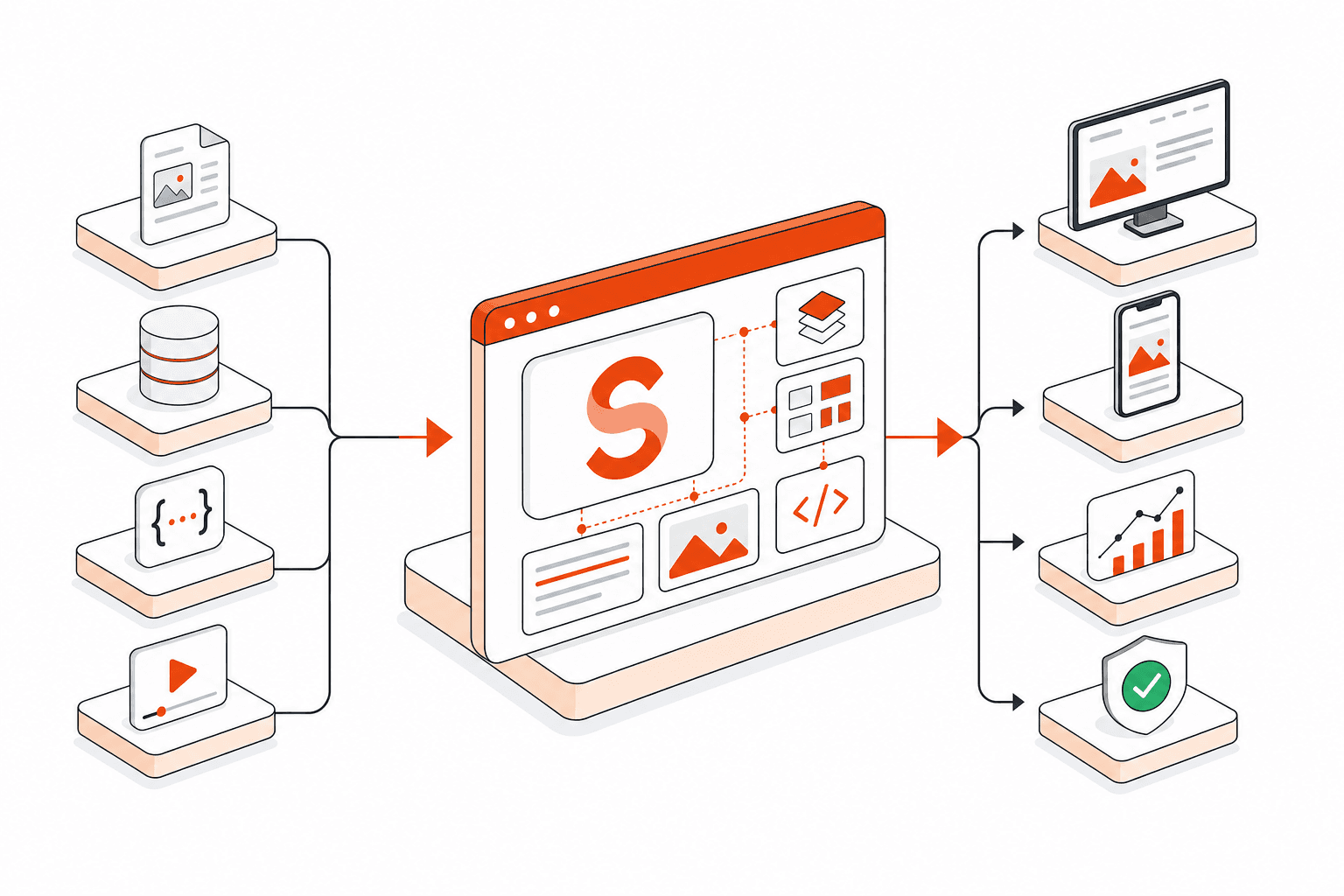
Teams supported by Codalent
What your Sanity development service can include
Scope is based on your publishing workflow, existing stack and priorities — not a fixed CMS template.
Content modelling
A documented model for reusable content, relationships, taxonomy, assets and SEO fields. Your team avoids duplicated content and gains clearer publishing rules.
Editor-focused Studio
Studio navigation, field guidance, previews, templates and validation designed around real editorial tasks. Marketers can complete routine updates with less developer dependence.
Frontend integration
A maintainable connection between Sanity and your agreed website or application stack, including preview and content rendering. Published content reaches the right experience predictably.
CMS migration
Content audit, mapping, repeatable import scripts, asset and reference checks, content QA, redirects and cutover planning. Migration risks are identified before launch.
Marketing-stack connections
Integration with relevant forms, CRM, analytics, search, localization or product data. Content operations remain connected to the systems marketing already uses.
Training and ongoing support
Editor training, technical documentation, release checklists and a prioritised improvement backlog. Your team has a clear operating model after launch.
A maintainable Sanity architecture, not just a set of schemas
Codalent selects the approach after reviewing your content, frontend, hosting, publishing frequency, security requirements and Sanity plan. Each decision balances editor usability with reliable delivery.
Schemas and Studio
TypeScript or JavaScript schemas define reusable documents, objects and references. Studio validation improves editor guidance, while imports and API mutations receive separate checks because Studio rules do not validate every external write.
GROQ and frontend delivery
Explicit GROQ projections return only the content the frontend needs. Typed queries, Portable Text rendering and responsive image handling support maintainability across Next.js, React or another suitable frontend.
Preview and publishing freshness
Production and draft content are separated deliberately. API CDN caching, webhooks, framework revalidation or Live Content are selected according to hosting, traffic and publishing needs, avoiding unnecessary uncached requests or stale pages.
Access and safe change
Dataset access, token scopes, secrets, environments and available roles follow least-privilege principles. Schema changes and migrations are tested against non-production content before controlled release.
Replace CMS bottlenecks with clear technical ownership
Sanity projects often stall when content modelling, frontend work and marketing operations have separate owners. Editors face confusing fields, schema changes become risky, publishing behaviour is unclear and maintenance waits behind unrelated engineering priorities.
An integrated technical team for ongoing Sanity delivery
Your subscription can combine developers, a technical project manager and marketing-technology expertise. It is more coordinated than separate freelancers, more flexible than building a full internal team and designed for accountable delivery beyond launch.
Subscribe and assemble the team
We align the required technical capabilities with your Sanity priorities. You gain focused capacity without recruiting every role internally.
Prioritise work in ClickUp
Requirements, tasks and decisions stay visible on a shared ClickUp board. Codalent AI can support research, planning and documentation under human review.
Collaborate directly
Use a dedicated Slack channel and weekly cadence calls to resolve questions, review progress and adjust priorities without slow supplier handovers.
Deliver and continuously improve
The team builds, tests, reviews and documents each release, then moves to the next priority. You retain transparent progress and ongoing technical ownership.
Planning a new Sanity build, migration or improvement?
Tell us whether you are starting fresh, moving from another CMS or improving an existing Sanity setup. We will discuss your workflow, current stack and immediate priorities.
Sanity development FAQs
What can a Sanity development subscription include?
It can cover discovery, content modelling, Studio configuration, frontend integration, migration, previews, publishing architecture, marketing-stack integrations, testing, documentation, training and ongoing improvements. The active scope is prioritised around your goals rather than treating every capability as a default requirement.
Can Codalent improve an existing Sanity implementation?
Yes. We can review and improve existing schemas, Studio navigation, validation, GROQ queries, previews, publishing behaviour, integrations and documentation. Changes are scoped against current content and frontend dependencies so schema improvements do not leave existing documents incompatible.
Can you migrate content from another CMS?
Yes. Migration work can include content inventory, field mapping, transformation scripts, test imports, asset and reference checks, SEO requirements, redirects and cutover planning. Content quality, ownership and platform constraints are reviewed before the final migration plan is agreed.
Will marketers be able to publish without developers?
We design routine editing around clear fields, controlled page composition, previews, validation and training. Editors may still need development support for new components, integrations or content-model changes, but everyday publishing should not depend on avoidable engineering work.
How do you prevent stale or unpublished content appearing on the site?
We separate production and preview perspectives, then choose an appropriate freshness strategy using CDN caching, webhooks, framework revalidation or Live Content where justified. The decision depends on your frontend, hosting, traffic and publishing frequency rather than a universal configuration.
Can you work with our existing frontend and technology choices?
Yes, subject to technical discovery. We review your framework, hosting, APIs, analytics, CRM, forms, search and localization requirements. If your internal team has already selected technologies, we can work within those decisions and raise maintainability or security trade-offs clearly.
How are work and changing requirements managed?
Work is prioritised through the shared ClickUp board, discussed in Slack and reviewed during weekly cadence calls. When requirements change, the team assesses dependencies and trade-offs, updates priorities and keeps delivery status visible instead of allowing scope decisions to remain implicit.
Who owns the completed work, and how is it handed over?
Ownership and commercial terms are confirmed in the engagement agreement. Operationally, schemas, queries and integration code are kept in the agreed source-control environment, with documentation and training included where scoped. This supports internal ownership, continued Codalent support or a structured handover.
Build a Sanity setup your editors and developers can maintain
Tell us whether you are planning a new implementation, migration or improvement project. We will discuss your workflow, current stack and immediate priorities.
No prepared technical specification is required for the first conversation.