Backend API development services
Codalent designs and develops backend services, custom APIs, webhooks, and integrations that connect websites, apps, CMSs, CRMs, analytics, payments, and internal tools. Bring us in when launches are blocked by backend dependencies, data is being moved manually, integrations fail unpredictably, or existing endpoints are too unclear to build against with confidence.
We work from your existing stack and do not begin with a predetermined rewrite recommendation.
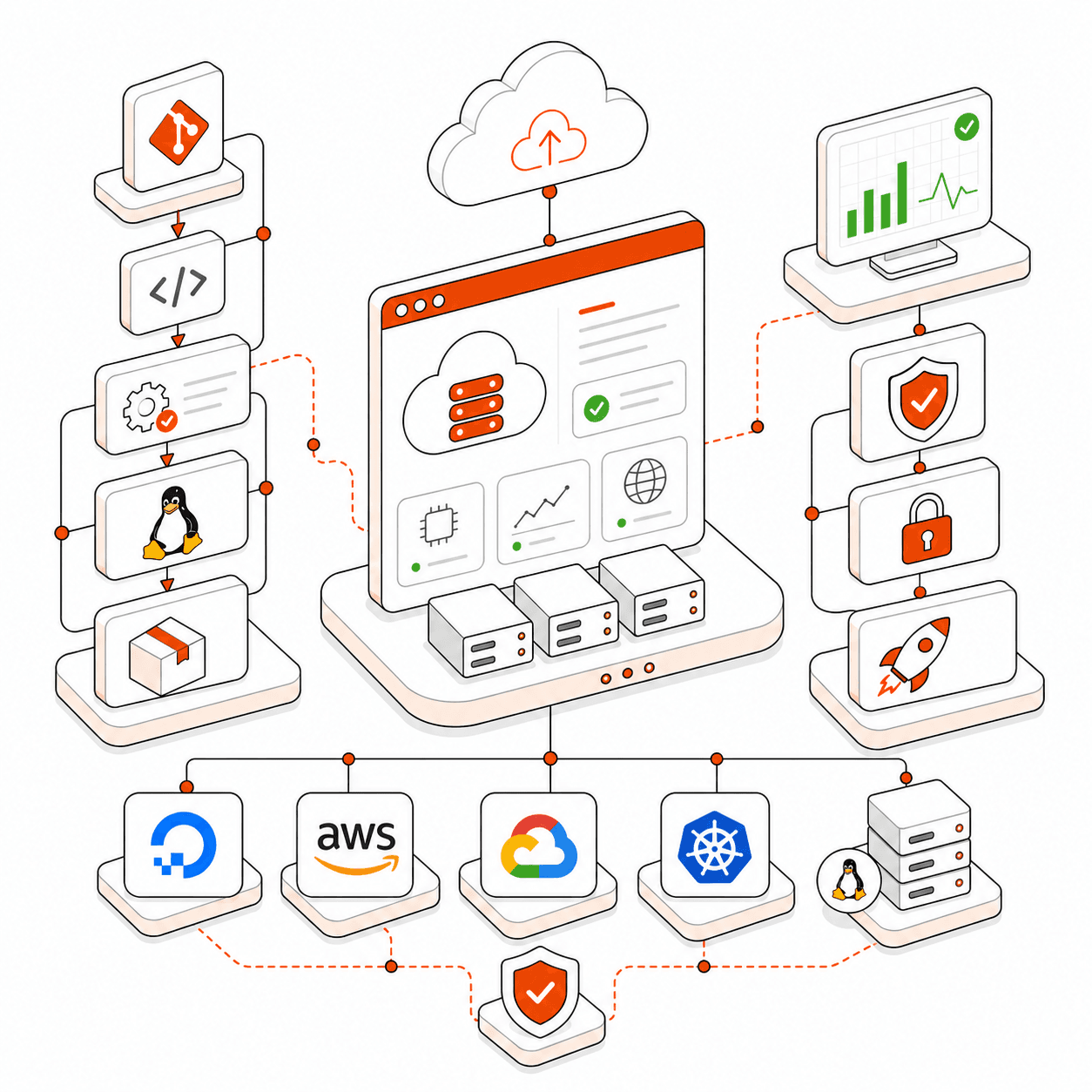
One team for the systems behind your product
Unblock launches with the data access, business logic and integration layer teams are waiting on
Replace manual data movement with controlled, reliable system-to-system workflows
Make integrations hold with deliberate authentication, retries and failure handling
Operate with visibility through structured logs, alerts and request tracing
Trusted by teams that need dependable systems behind the experience
When the systems behind the experience fail, launches slow down
Launches wait on data access
A website, campaign flow, portal, or app is ready to go, but the required data, business logic, or integration layer is not. The result is a delayed launch and a frontend team waiting for dependencies.
Important data is moved by hand
Lead, customer, product, order, subscription, or campaign data is copied between systems through exports and spreadsheets. That creates inconsistent reporting, operational rework, and avoidable delays.
Third-party integrations break at the edges
Authentication, field mapping, vendor rate limits, webhook delivery, retries, and error states are often treated as afterthoughts. When they fail, teams face missing records, customer friction, or incomplete workflows.
Production issues are hard to trace
Without useful logs, alerts, request tracing, and clear ownership, a failed submission or sync can take too long to diagnose. The business sees unreliable operations while engineering loses time finding the cause.
Backend and API work shaped around the workflow you need to improve
Our custom API development work starts with the systems, users, data, and operational outcome involved. Architecture follows real consumer needs: REST, GraphQL, event-driven processing, queues, or another approach may each be appropriate depending on the workflow.
New API and backend services
Design and build API endpoints, data access patterns, business logic, middleware, background jobs, and documentation for web, mobile, partner, and internal consumers.
Custom integrations and connectors
Connect CMSs, CRMs, marketing automation, analytics, payments, consent platforms, advertising tools, and internal systems with authentication, field mapping, validation, webhooks, and failure handling.
Legacy enablement without assumed rewrites
Audit an existing backend, document unreliable endpoints, add an adapter or API layer, and expose selected capabilities to modern websites, apps, or automations without beginning with a full replacement recommendation.
Reliability and operational improvements
Improve error handling, retry behaviour, queue processing, deployment workflows, alerts, logs, request tracing, and runbooks so issues are easier to detect and recover from.
Build the connection between your customer experience and your operational systems
Website and CMS lead flows
Connect a website or CMS to CRM and marketing automation workflows. Codalent can implement validated form handling, lead routing, consent-aware data mapping, and error visibility so teams can follow the path from submission to follow-up.
SaaS product and partner APIs
Create dependable interfaces for web and mobile clients, internal tools, or partners. The work can include endpoint design, tenant-aware access controls, schemas, documentation, and compatibility planning.
Webhooks and event processing
Process submissions, subscriptions, orders, payments, or campaign actions as durable workflows. Technical work can include signature verification, event persistence, duplicate-event handling, queues, and replay paths where needed.
Replace spreadsheet-based handoffs
Turn repeated exports and manual updates into controlled system-to-system workflows. Define source-of-truth decisions, identifiers, field transformations, validation, and reconciliation for partial failures.
Extend a legacy application incrementally
Expose selected legacy functions or data through an API layer or integration adapter. This gives new experiences a cleaner interface while allowing broader modernisation decisions to be made with better information.
Built for clear contracts, controlled access, and diagnosable operations
Reliable integrations require more than endpoints that work in a happy-path demo. Codalent plans the interface, data controls, failure behaviour, and operational visibility needed for the actual workflow.
Contracts that teams can build against
For APIs with multiple consumers, we define versioned contracts with request and response schemas, error behaviour, security requirements, pagination or filtering where relevant, and compatibility considerations. An OpenAPI definition may be used where it suits the project.
Authentication and authorization designed separately
We distinguish identity from access decisions. Scope can include roles or scopes, tenant boundaries, object-level access checks, service credentials, secret rotation, and least-privilege permissions appropriate to the systems involved.
Retries and webhooks handled deliberately
Where external platforms support it, webhook signatures can be verified. Retryable writes may use idempotency safeguards or equivalent deduplication, while retries are applied selectively to avoid duplicate records, cascading failures, and race conditions.
Operations that are easier to investigate
Structured logs, correlation IDs, latency and error metrics, customer-impact alerts, dashboards, and recovery documentation make backend behaviour more visible after launch.
What a backend and API engagement can include
Exact deliverables depend on the scope, existing environment, and risk profile. The aim is practical implementation and a maintainable handoff, not a black-box dependency. For a focused cross-system project, a backend development agency can provide useful capacity without requiring you to add permanent roles before the work is understood.
Discovery and system map
Review systems, user journeys, data ownership, integration dependencies, existing code, risks, and acceptance criteria. Document the data flows and priorities that shape the implementation plan.
Architecture and API contract
Provide a backend architecture and implementation plan, plus an API contract or OpenAPI definition where appropriate, covering endpoints, schemas, authentication, errors, and webhook events.
Services, adapters, and tests
Build backend services, integration adapters, database access patterns, middleware, and background jobs as scoped. Support them with unit, integration, and contract tests.
Release and environment support
Support staging and UAT, deployment workflows, environment configuration, secret handling, release checklists, and CI/CD visibility where these are in scope.
Documentation and ownership clarity
Provide API reference material, setup notes, operational runbooks, recovery guidance, and ownership boundaries so internal teams can understand and operate the work.
Shared access and practical handoff
Work through shared project communication, with source-code access, documentation, and visibility into relevant repositories and deployment setup maintained throughout the engagement.
A practical path from unclear integration to working operational flow
You get dedicated developers as needed, a technical project manager, a dedicated Slack channel, a ClickUp project board, weekly meetings, demos, visible risks, and tracked decisions. The work stays understandable to marketing and product stakeholders without losing technical detail.
Discover and define
Review systems, users, data ownership, existing code, integration dependencies, access requirements, risks, and acceptance criteria.
Design the contract and plan
Agree on data flows, API behaviour, authentication and authorization, error states, release approach, and phased implementation priorities.
Build, test, and release
Implement services or adapters, validate contracts and integrations, support staging and UAT, and deploy through the agreed workflow.
Operate and improve
Provide documentation and handoff, monitoring support where scoped, and optional capacity for maintenance, vendor changes, and incremental improvements.
Not sure whether you need a new API, an integration repair, or a broader backend change?
Start with the blocked workflow: the systems involved, available access, current pain points, and the launch or operational outcome you need. Codalent can work from your existing stack and does not begin with a predetermined rewrite recommendation.
Questions teams ask before starting backend and API work
What is the difference between backend development, custom API development, and API integration?
Backend development covers the services, business logic, data access, jobs, and infrastructure-facing work behind an application. Custom API development creates a defined interface for other systems or clients to use that backend. API integration connects systems through those interfaces, including authentication, field mapping, webhook handling, validation, and failure management. A project may involve one or all three.
Do we need REST, GraphQL, webhooks, a queue, or an event-driven approach?
That depends on who consumes the data, the access patterns, latency requirements, vendor constraints, expected failure modes, and operational complexity. Codalent assesses the workflow before recommending an approach rather than selecting an architecture by default.
Can Codalent connect our CMS, website, app, HubSpot or CRM, analytics, payments, and internal systems?
Yes, where the relevant platforms, permissions, and technical interfaces support the required workflow. Discovery confirms the systems involved, available credentials or sandbox access, data mapping, vendor constraints, and the business rules that need to be implemented.
Can you audit, document, and stabilise an existing API before adding features?
Yes. A focused engagement can begin with reviewing existing endpoints, code, data flows, dependencies, logs, and failure patterns. The output may include documentation, a prioritised improvement plan, contract definitions, tests, monitoring improvements, or targeted repairs before new features are added.
How do you handle API authentication, authorization, secrets, and customer data?
The approach is scoped to the project’s systems and risk profile. It can include authentication design, roles or scopes, tenant and object-level access checks, least-privilege service credentials, secure secret handling, input validation, encryption in transit, and data-safe logging practices.
How do you prevent duplicate records or submissions when requests are retried?
For retryable create or update operations, we define the expected behaviour explicitly. Depending on the workflow, this may include idempotency keys, deduplication rules, persisted processing state, queue controls, and reconciliation processes. Retries are not applied indiscriminately, particularly for non-idempotent writes.
Will we receive documentation, tests, source-code access, and visibility into deployment setup?
The engagement can include API documentation, setup notes, automated tests, runbooks, and shared visibility into repositories and CI/CD workflows where they are in scope. Specific access arrangements are agreed around your existing environment and delivery process.
Can you work alongside our internal engineering team or another agency?
Yes. Codalent can add focused capacity alongside internal teams or other partners. Shared Slack communication, a ClickUp project board, weekly meetings, demos, acceptance criteria, and documented decisions help keep responsibilities and dependencies visible.
Can you integrate a legacy application without replacing it?
Often, yes. Codalent can assess whether selected legacy capabilities can be exposed through an API layer, adapter, or controlled integration. This can support a new website, app, automation, or partner workflow while larger platform decisions are considered separately.
Do you provide post-launch maintenance, monitoring, and support?
Ongoing support can be included where needed. Scope may cover maintenance, vendor API changes, incident remediation, monitoring improvements, integration updates, and incremental backend work. The exact operating model, responsibilities, and response expectations are agreed for the engagement.
Make the systems behind your next launch easier to rely on
Tell us which systems need to connect, what is slowing the workflow down, and what needs to work reliably. We will help identify a practical backend and API development path. Suitable for new builds, integration repairs, legacy enablement, and ongoing backend support.
No obligation, and no predetermined rewrite recommendation before the conversation.