Build a Hygraph CMS your marketing team can run with confidence
Codalent designs, implements and supports Hygraph for multi-brand, multilingual websites, apps and campaign platforms. Create reusable content, connect the systems you already use and give editors clear publishing guardrails.
Scope is based on your channels, existing systems and current Hygraph plan — not a fixed CMS template.
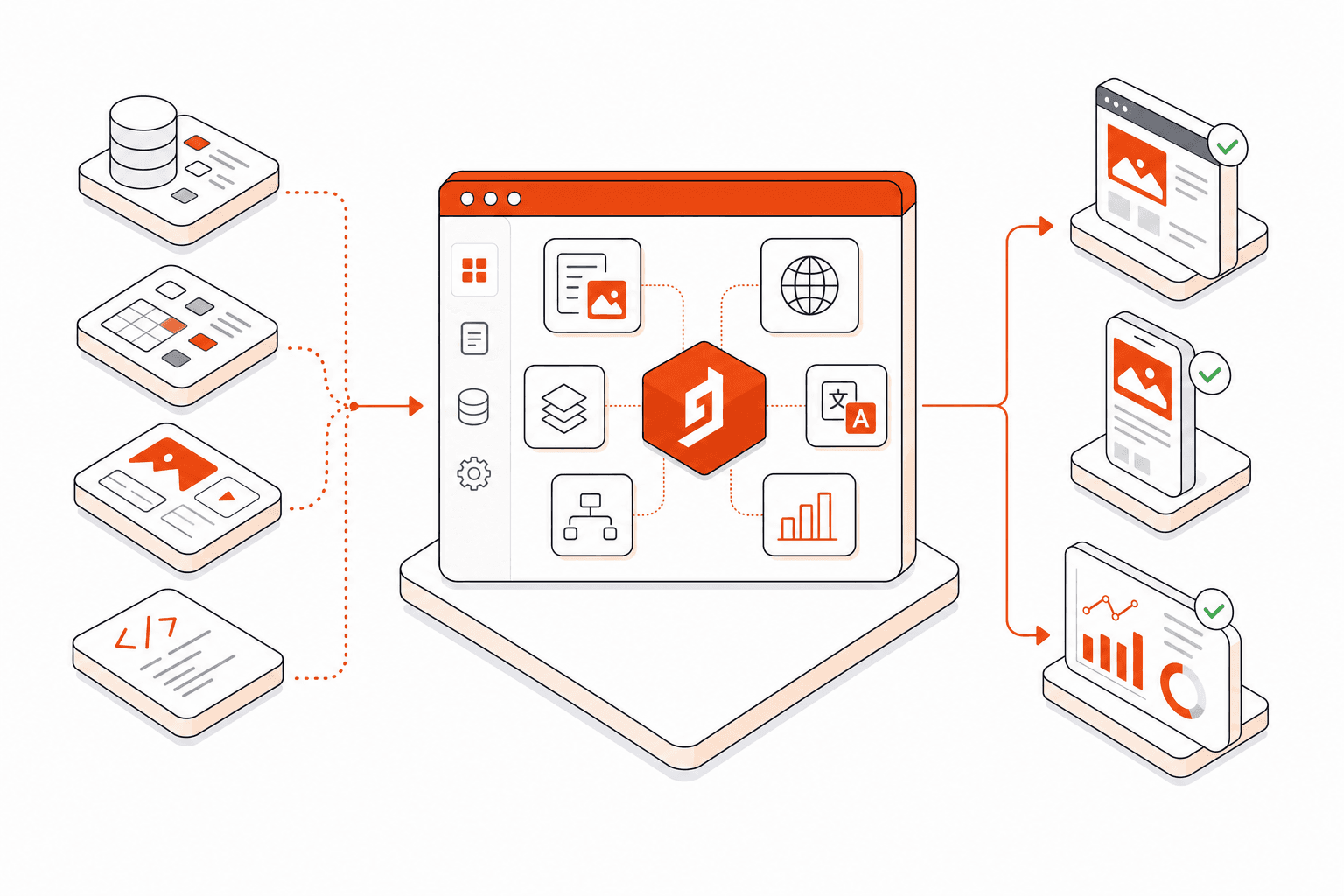
Selected client work
Hygraph implementation built around how your team publishes
We turn platform decisions into a workable content operation, not just a CMS setup.
Content architecture
We define models, components, relationships, taxonomy, validations and naming standards around real campaign, brand and editorial needs, so structured content can support more than one page or channel.
Editorial workflows
We configure roles, publishing stages, preview guidance and practical operating rules for editors, reviewers and market teams. Publishing ownership becomes clearer with fewer routine developer requests.
GraphQL and frontend delivery
We build or improve the integration between Hygraph and your website, app or portal using maintainable query and component patterns, so content reaches the right experience through a defined API contract.
Connected source systems
We map ownership across Hygraph, commerce, PIM, DAM, CRM and internal systems before deciding what should be federated or migrated. The result is less unnecessary data duplication and clearer responsibilities.
Migration and enablement
We plan mappings, dry runs, validation and cutover for content, assets, relations, locales and SEO metadata, then train your team, for a controlled move from a legacy CMS rather than a simple export.
A GraphQL-native setup designed for reliable marketing operations
Hygraph generates its editing experience and GraphQL API from the content model, so technical choices affect editor usability, frontend maintainability and release safety. We select the approach based on your channels, existing systems, delivery cadence and current Hygraph plan.
Models before page layouts
We use reusable models, components and relations where they simplify real editorial work. Overly flexible page builders can create inconsistent pages and difficult queries, so we apply guardrails.
GraphQL integration patterns
Hygraph can support modern frontends such as Next.js, Nuxt, Astro, Remix or an existing application. We define typed queries, error handling, caching and ownership so changes remain manageable.
Federation with resilience
Remote Sources may suit commerce, PIM or legacy APIs when those systems should remain the source of truth. We assess latency, authentication, cache policy, null states, rate limits and fallback behaviour first.
Secure previews and permissions
Draft previews must use draft content and protected server-side credentials. We scope API access and tokens by the required models, locales, stages and operations rather than exposing broad public access.
Localization and release controls
We define locale fallback, routes, asset rules and market responsibilities. Environments support isolated schema testing, while workflows and publishing controls support editorial governance.
Replace CMS bottlenecks with clear technical ownership
Hygraph projects often stall when content decisions, frontend work, integrations and editorial operations are handled by separate suppliers.
An embedded Hygraph team without managing multiple freelancers
Use a coordinated technical team for ongoing Hygraph work without managing multiple freelancers or building every capability in-house.
Subscribe and assemble the team
Bring in the developers, technical project manager and marketing-technology expertise your Hygraph work requires. You gain flexible access to the right technical capabilities.
Prioritise in ClickUp
We maintain a shared ClickUp board for CMS improvements, integrations, migration tasks and campaign requests. Your team can see priorities, progress and decisions.
Collaborate in Slack and weekly calls
A dedicated Slack channel and weekly cadence calls keep editorial, marketing and technical questions moving. This reduces handover delays and keeps priorities current.
Deliver, review and improve
We ship, test and document work, then refine the backlog. Codalent AI can support research, planning, documentation and quality checks, with human technical ownership and review.
Planning a new Hygraph build, migration or improvement?
Tell us whether you are starting fresh, moving from another CMS or improving an existing Hygraph setup. We will discuss your content architecture, current stack and immediate priorities.
Hygraph development FAQs
What does a Hygraph development engagement include?
It can include discovery, content modeling, Hygraph configuration, GraphQL integration, frontend work, previews, localization, migration planning, editorial enablement and ongoing support. The exact scope depends on whether you are launching a new platform, improving an existing setup or migrating from another CMS.
Can Hygraph work with our existing website or frontend?
Usually, yes. Hygraph can connect to existing applications and modern frameworks such as Next.js, Nuxt, Astro or Remix through GraphQL. We review your frontend architecture, hosting, caching and deployment process before recommending whether to integrate, refactor or rebuild selected parts.
Can we keep Shopify, a PIM, DAM, CRM or internal system as the source of truth?
Yes, where that is the right operating model. We identify which system owns each type of data, then assess whether Hygraph Content Federation, a separate integration or a migration is most appropriate. Runtime reliability, caching, permissions and failure handling are part of that decision.
How do you prevent an ungoverned page builder?
We design reusable components around approved content patterns, define validations and limit choices where necessary. The goal is to give marketers useful flexibility without creating inconsistent pages, confusing editorial decisions or GraphQL queries that become difficult to maintain.
How do draft previews and permissions work?
Preview should retrieve draft content through protected server-side access, not public production data. We define preview URLs, cache behaviour, role permissions and token scope so editors can review saved changes before publication while unpublished content remains controlled.
Can you migrate us from WordPress, Drupal, Contentful or another CMS?
Yes. We start with a model-first mapping of priority content, assets, relations, locales, slugs, redirects and SEO metadata. Migration work includes dry runs and reconciliation checks, because legacy content structures and publishing states often need deliberate handling.
What is included in the Codalent subscription?
The subscription provides an integrated technical team that can include developers, a technical project manager and marketing-technology expertise. You also receive a dedicated Slack channel, shared ClickUp board, weekly cadence calls, ongoing prioritisation and transparent delivery visibility.
Can the team support Hygraph after launch?
Yes. Ongoing work can cover schema and component improvements, frontend enhancements, integrations, performance, analytics, tracking, DevOps, release support and incident triage. This is useful when campaign requirements, markets, content operations or connected systems continue to change.
Make Hygraph easier to run, extend and publish with
Discuss your content architecture, migration, integrations or ongoing delivery needs with a technical team that understands marketing operations.
Bring your current CMS, frontend or integration questions — no prepared specification is required for the first conversation.